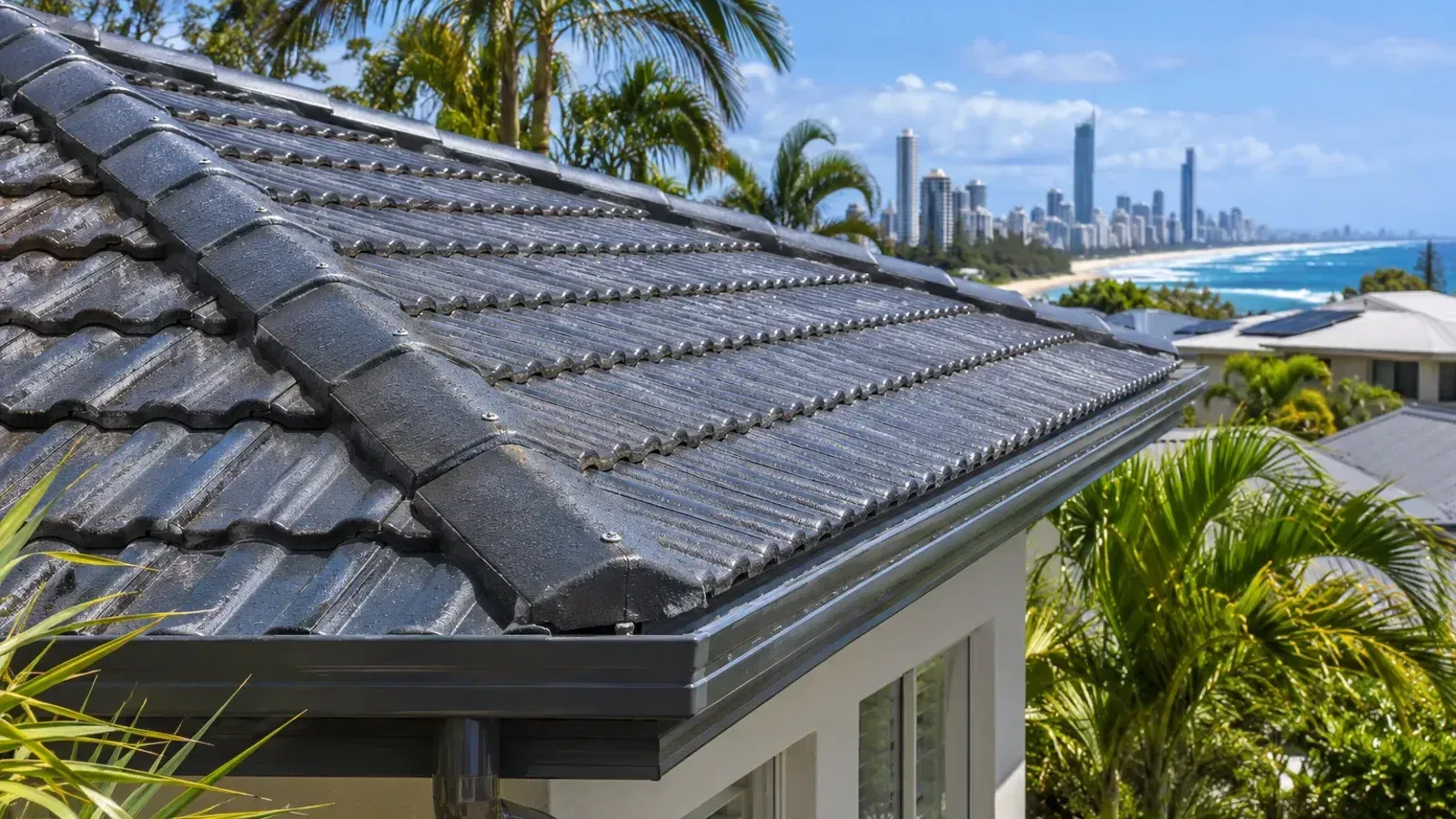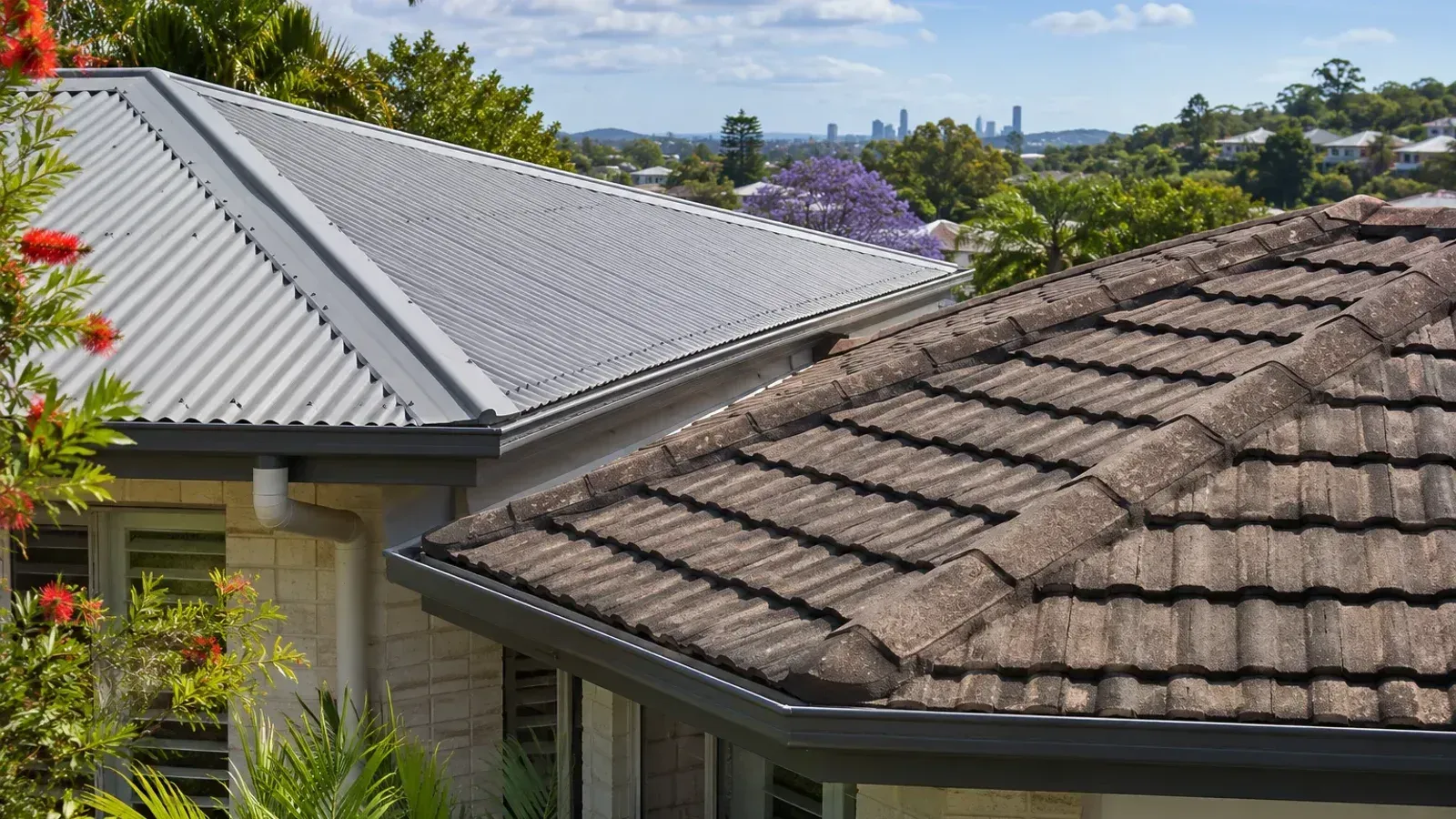
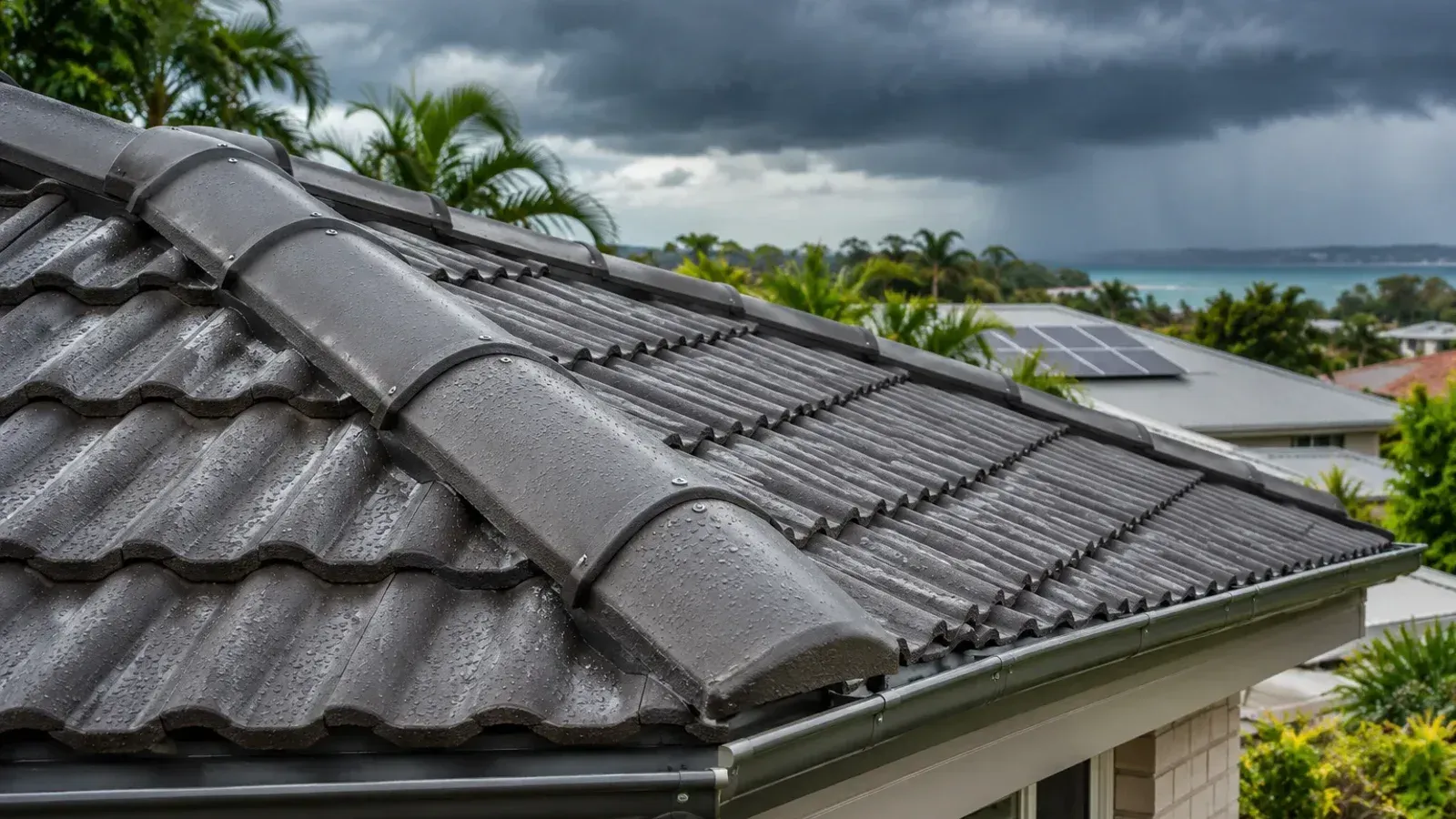
Ridge capping covers the meeting point of two tiled slopes, sealing the gap along the top of the roof and down the hips. Its condition, support and fixing matter in exposed coastal weather, and repainting a ridge does not establish that a loose cap is secure.
On the Gold Coast, the Sunshine Coast and bayside Brisbane, ridges and hips take the brunt of storm winds and wind-driven rain. Here is what the caps do and what to ask when a quote mentions them. Knowing the terms also makes quotes easier to compare.
How ridge capping protects a tiled roof
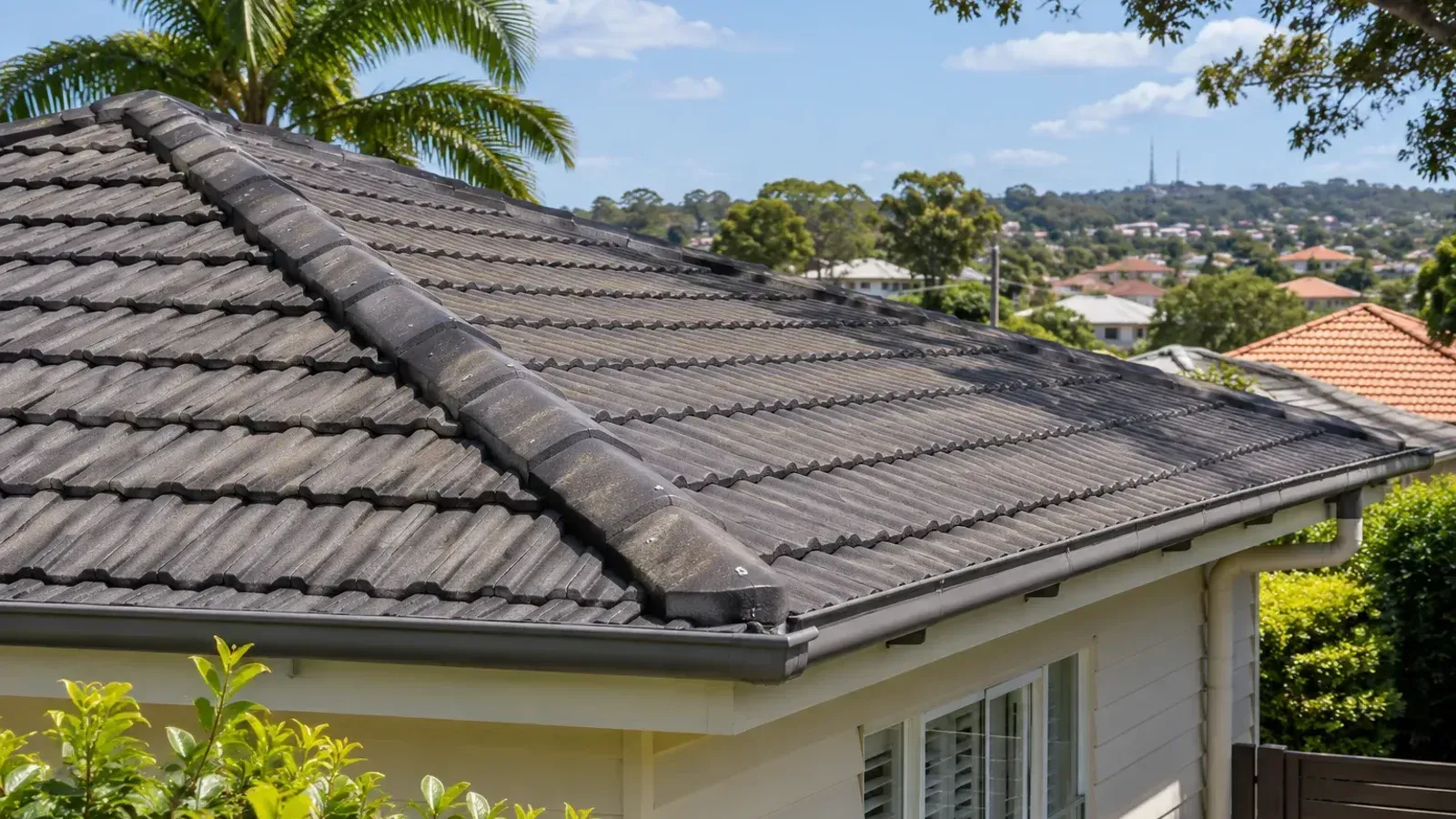
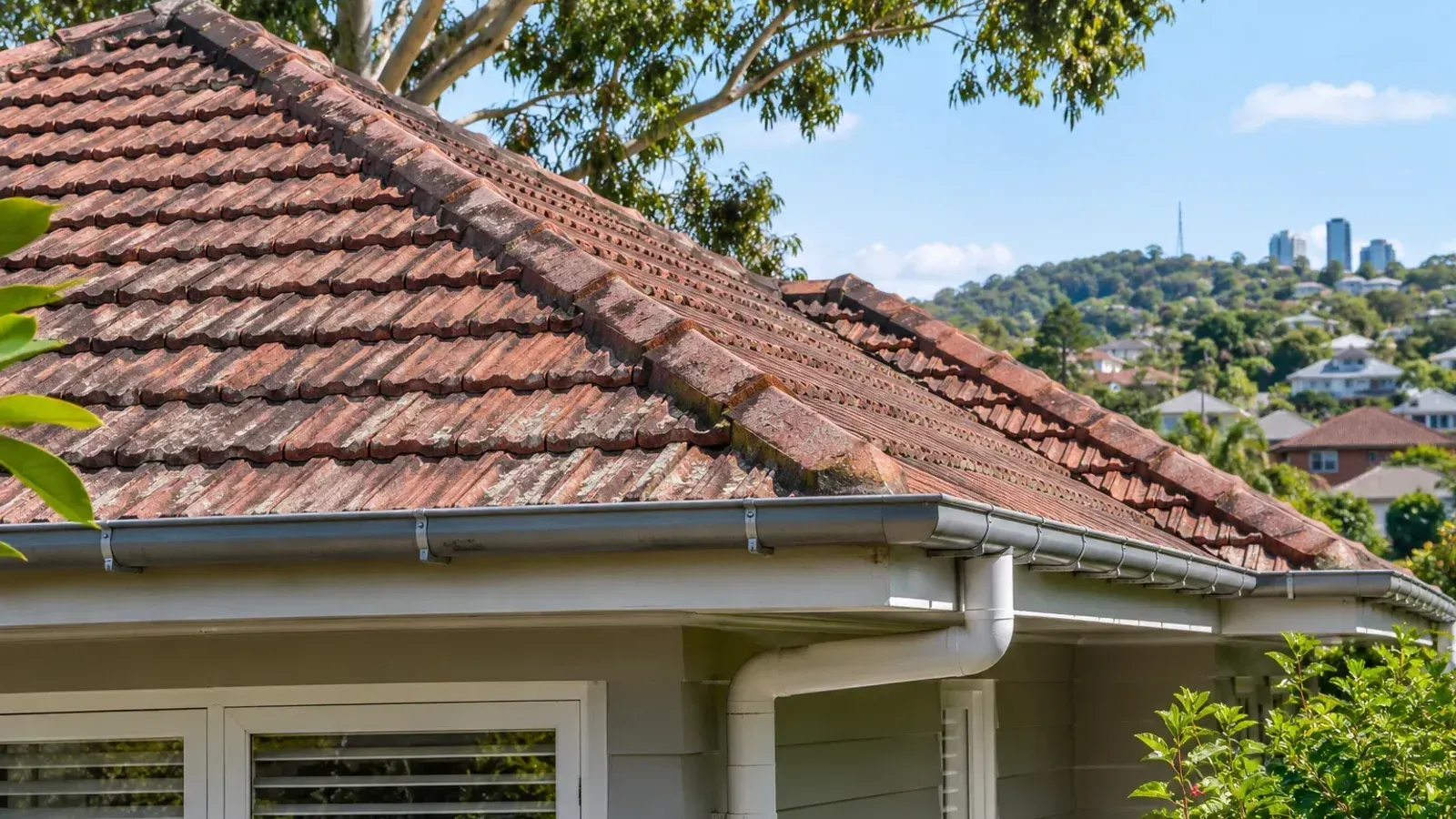
Each cap sits over the top course of tiles on both sides of a ridge or hip. Underneath, a bedding material supports the cap and fills the uneven gap between it and the tiles. Over the joint, pointing forms the exposed seal. Depending on the age of the roof, caps may also be held with clips or screws.
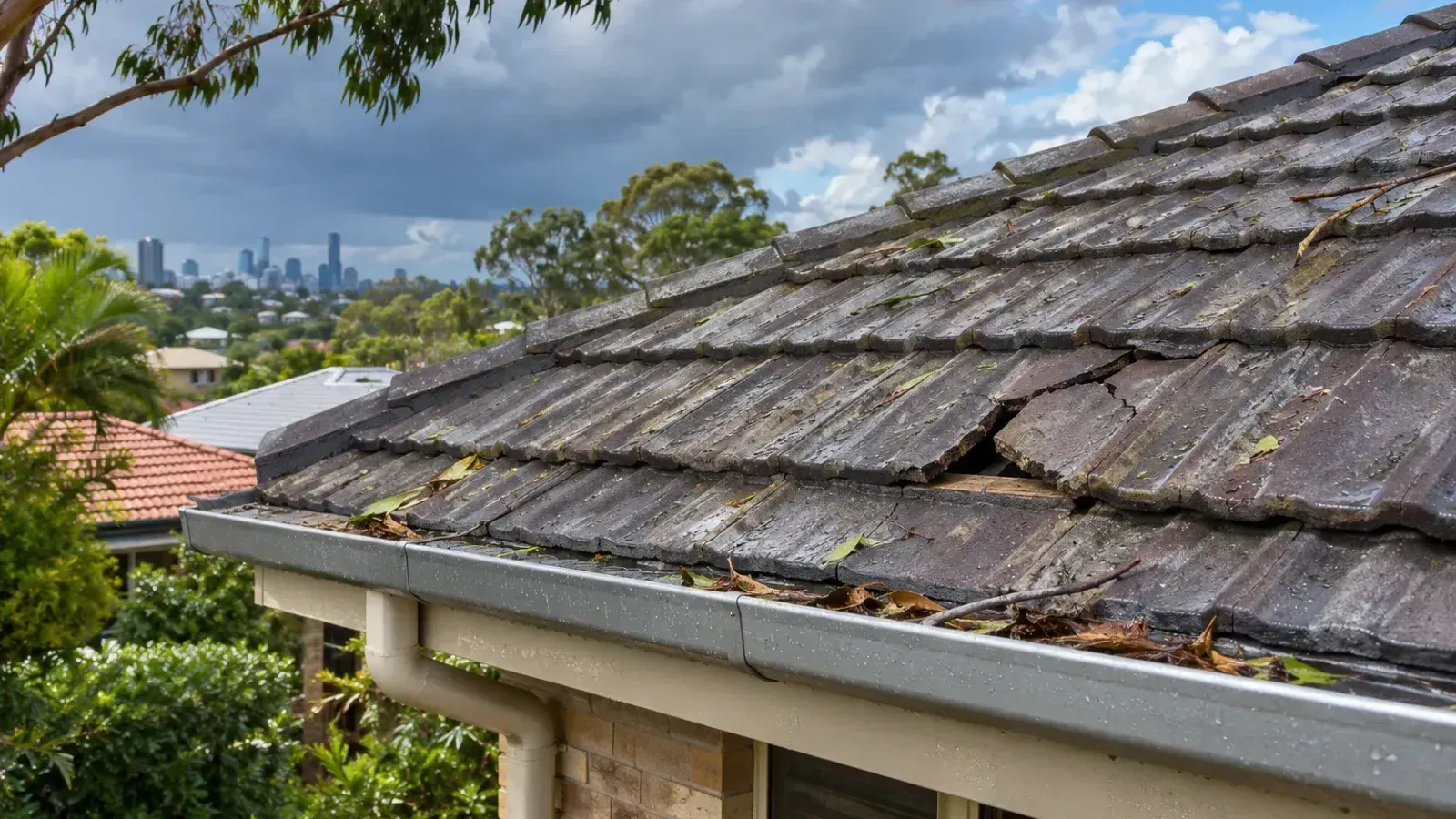
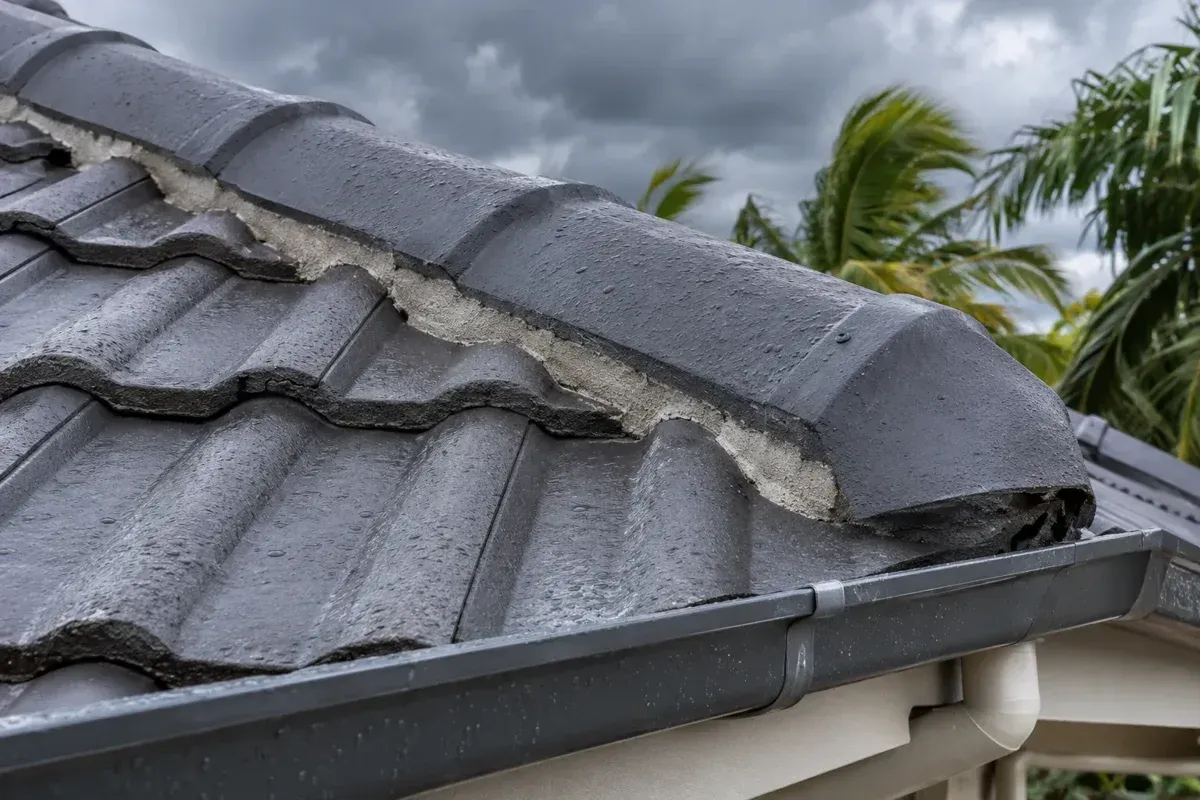
When this works, rain runs over the caps and down the tiles. When bedding cracks or caps loosen, strong wind can drive water under a cap, and a loose cap is more likely to move in a storm.
Distinguish bedding from pointing
Ask which material supports the ridge cap, what forms the exposed joint and how the cap is secured. A quote for repointing should explain whether loose or displaced caps also require rebedding or other fixing work. The terms are often mixed up:
- Rebedding means lifting the caps, removing the old bedding and setting them on new material.
- Repointing means applying a new pointing compound over the joint, on top of sound or new bedding.
- Fixing covers any clips, screws or ties that hold a cap in place.
Repointing over bedding that has already broken away may look neat but leave the cap unsupported. Ask how the roofer will confirm each cap is firm before new pointing goes on.
Check the surrounding tile field
A ridge concern may coincide with damaged tiles or a nearby change in roof plane. Ask for photographs showing both the individual cap and its position. It helps you understand whether the price covers one section, a full ridge line or associated repairs.
Tiles near the ridge can crack when walked on during earlier roof work, and the top course may have shifted if caps have moved. Ask whether broken or chipped tiles near the ridge are included and how replacements will be matched.
Include the ends of each ridge in the photos too. Where a ridge meets a hip or a gable, the junction is often finished with a separate cap or end piece, and these can loosen independently of the rest of the line.
Does cracked pointing mean every ridge cap needs replacing?
The condition of the caps, support and fixings matters. Ask which sections can be retained and which actually need removal, rebedding or replacement. Hairline cracks in one section do not always mean the whole ridge line has failed, while a cap the roofer finds loose needs attention regardless of how the pointing looks.
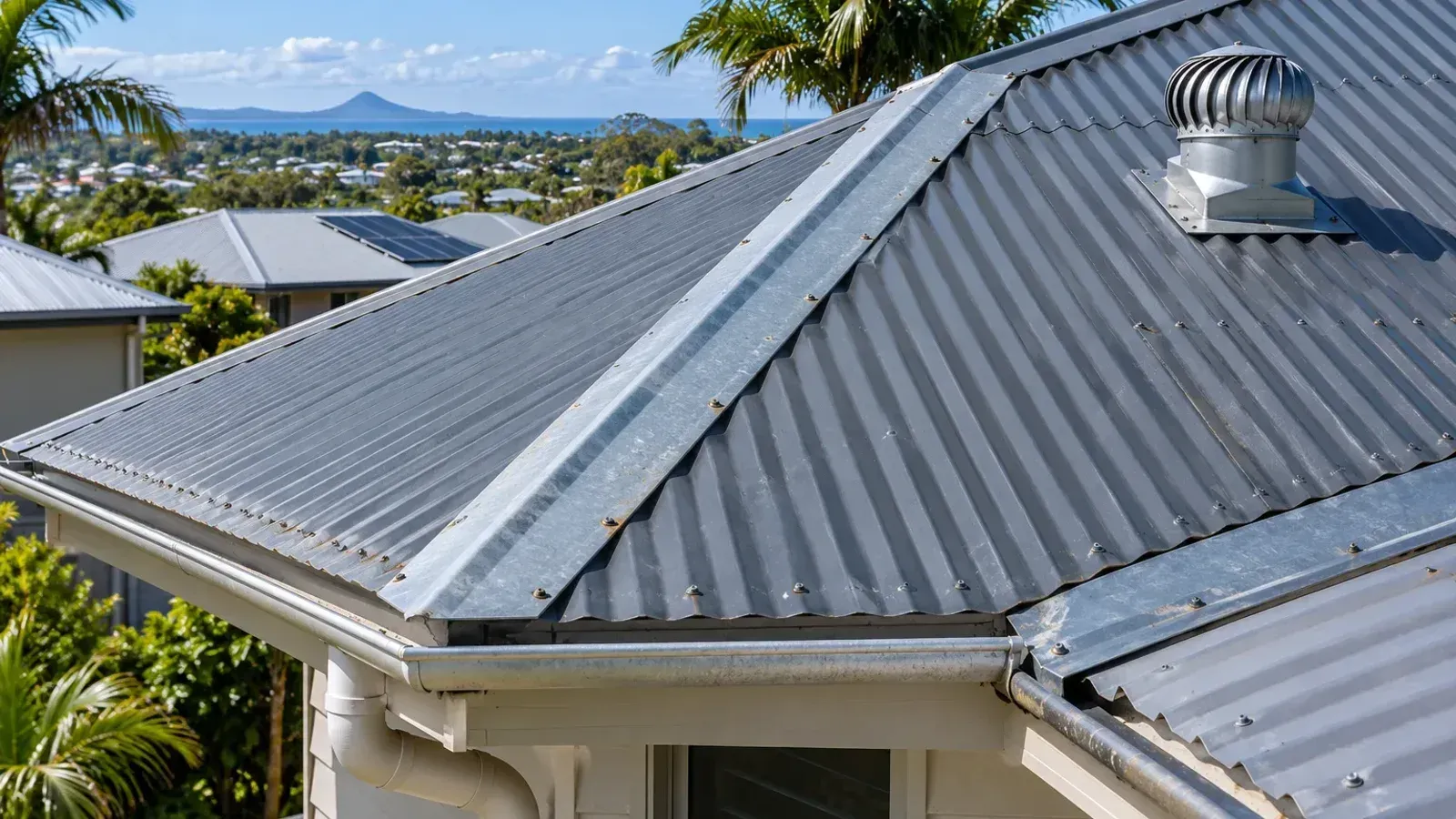
JMZ specialises in roof restoration and membrane painting. Its restoration scope can include minor visible broken, cracked or chipped tiles. Arrange metal roof repairs, sheet replacement or structural work with a suitably qualified roofing contractor before painting.
For how tile repairs fit into the wider job, see JMZ's page on tile roof repairs during restoration.
FAQs
Why do coastal ridges often show problems first?
Ridges and hips sit at the most exposed part of the roof, so they take direct wind, sun and rain. Older bedding can shrink and crack over time, which leaves caps less firmly supported.
Is painting the ridge enough?
No. A coating can improve appearance but does not secure a loose cap or replace failed bedding. Ask for the support and fixing to be confirmed before any finish is applied.
Are terracotta ridges treated differently?
The principles are similar, but matching caps and finishes on terracotta can differ from concrete tiles. JMZ's page on terracotta roof repairs explains how those roofs are handled.
Before you agree to ridge work
Sound ridge capping depends on firm caps, good support and secure fixing, not just fresh paint. Ask for photos and a clear scope, read JMZ’s guide to residential tile roof restoration, and request a roof restoration quotation from JMZ.