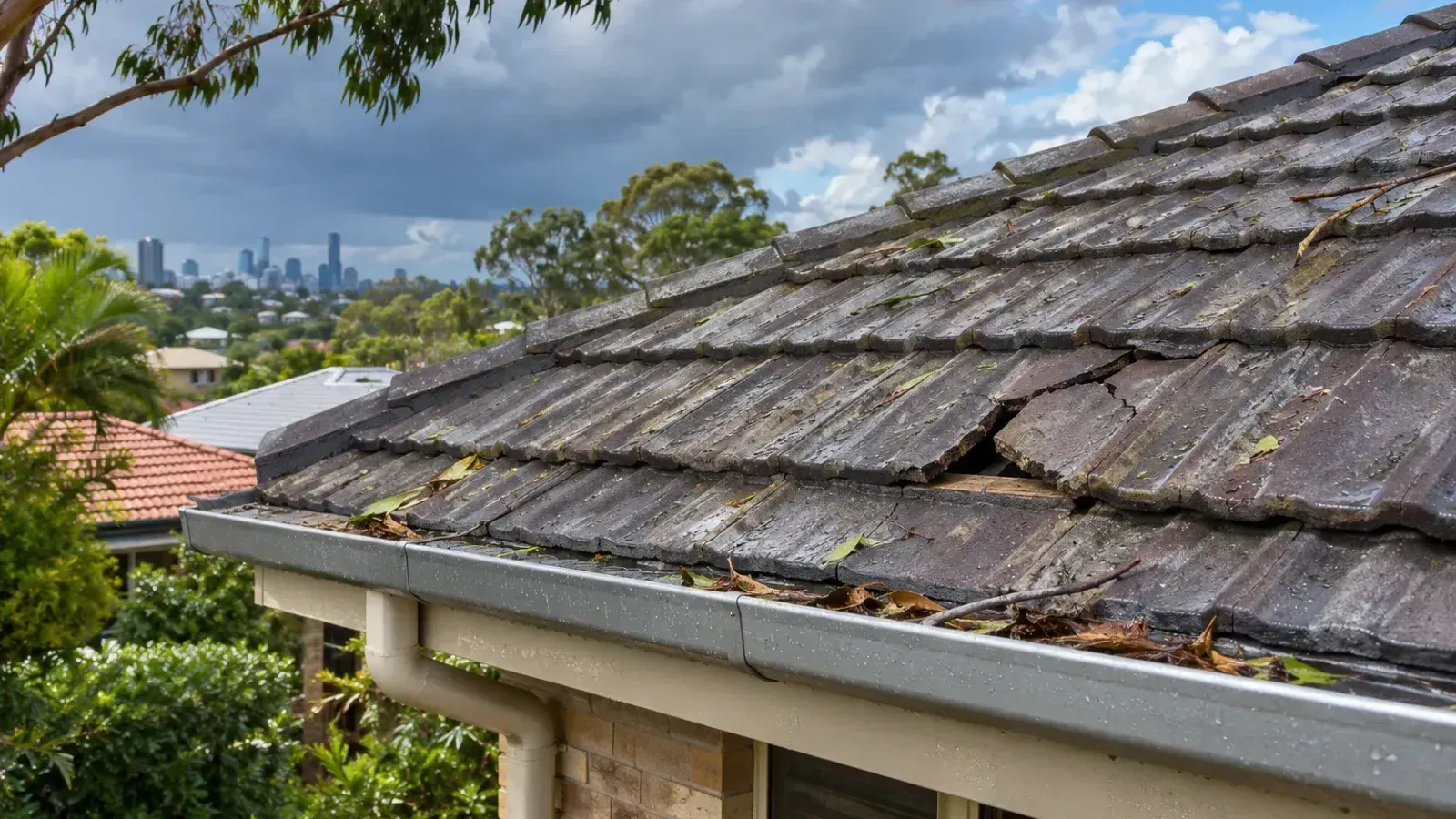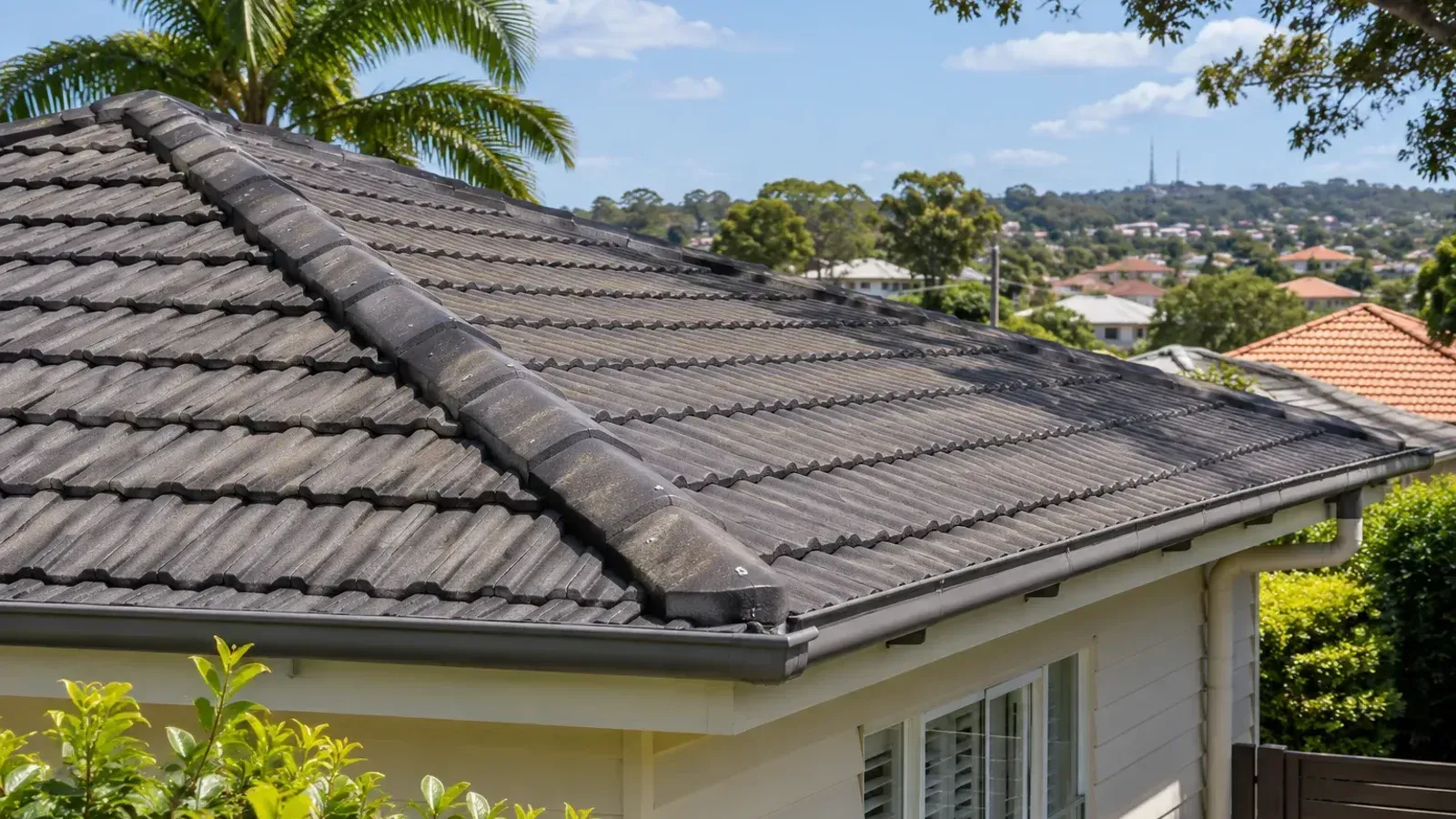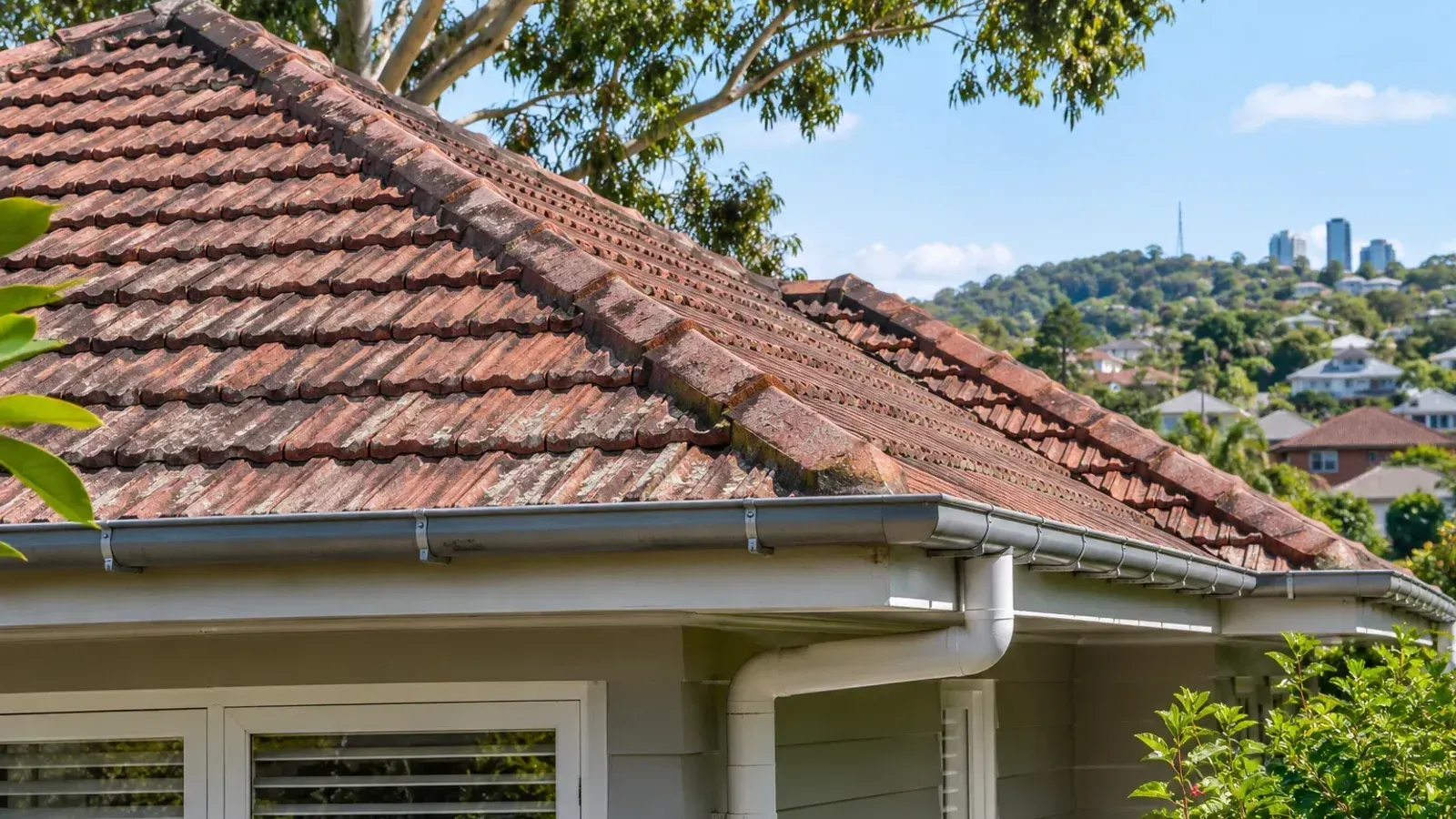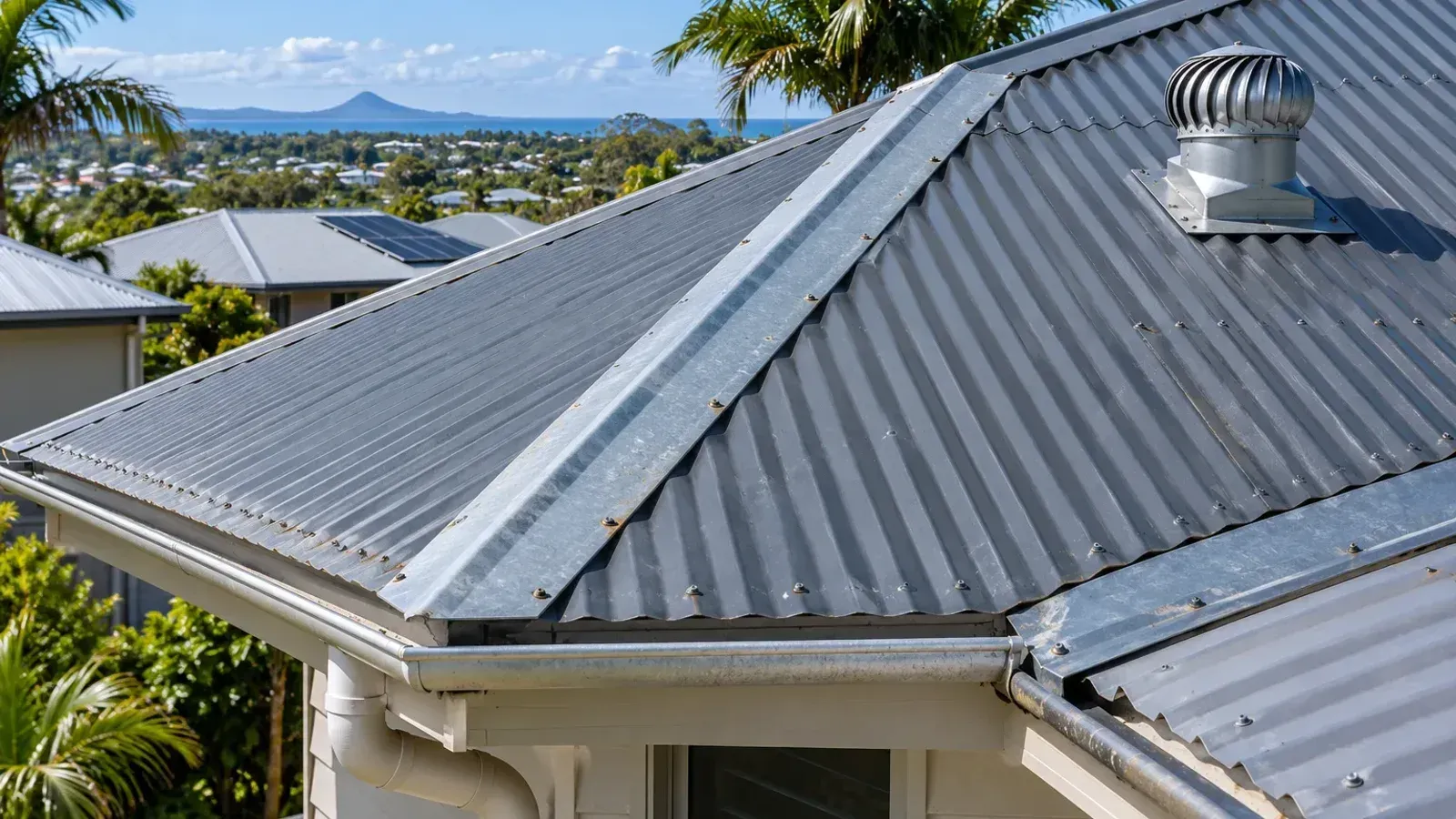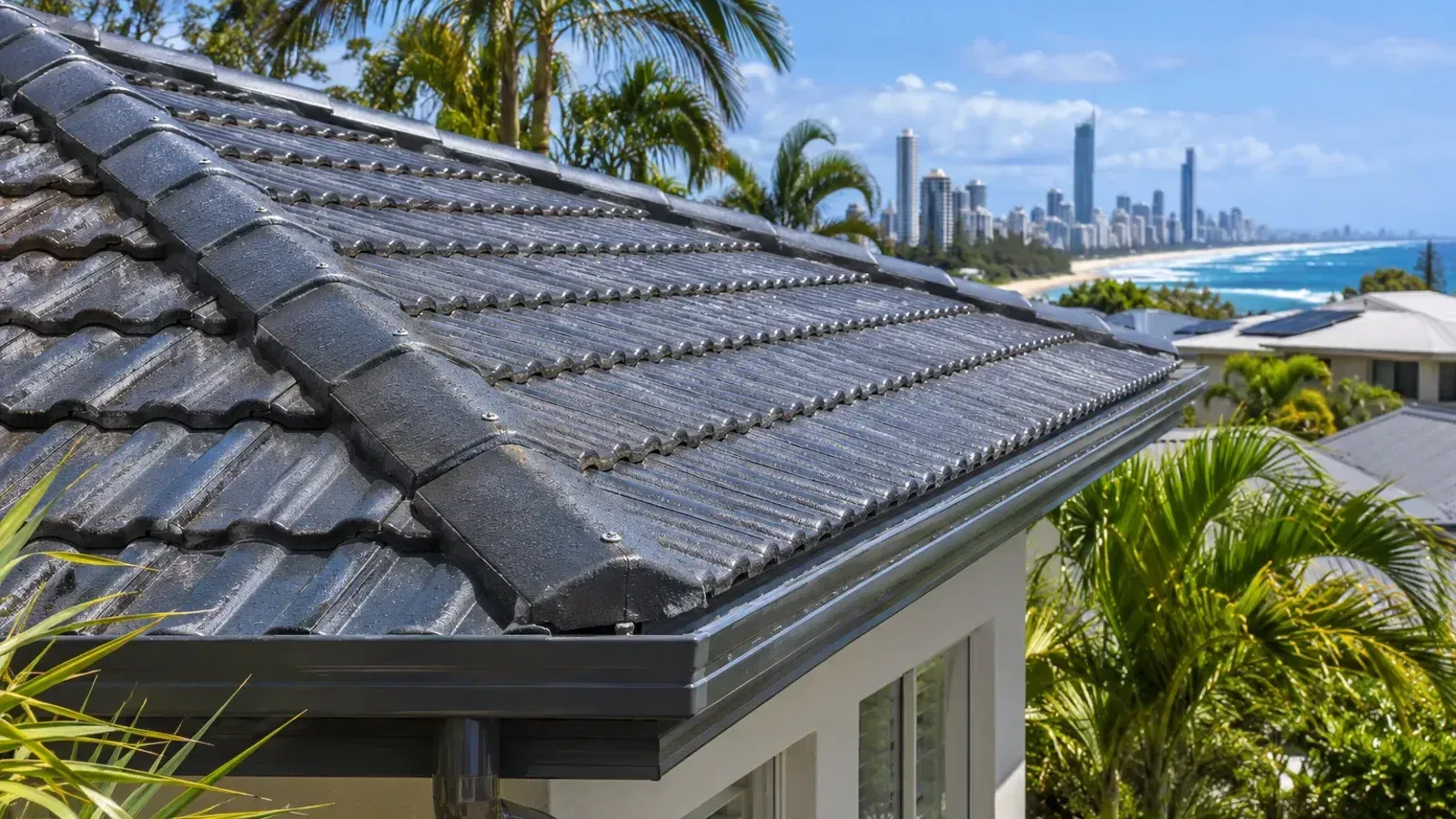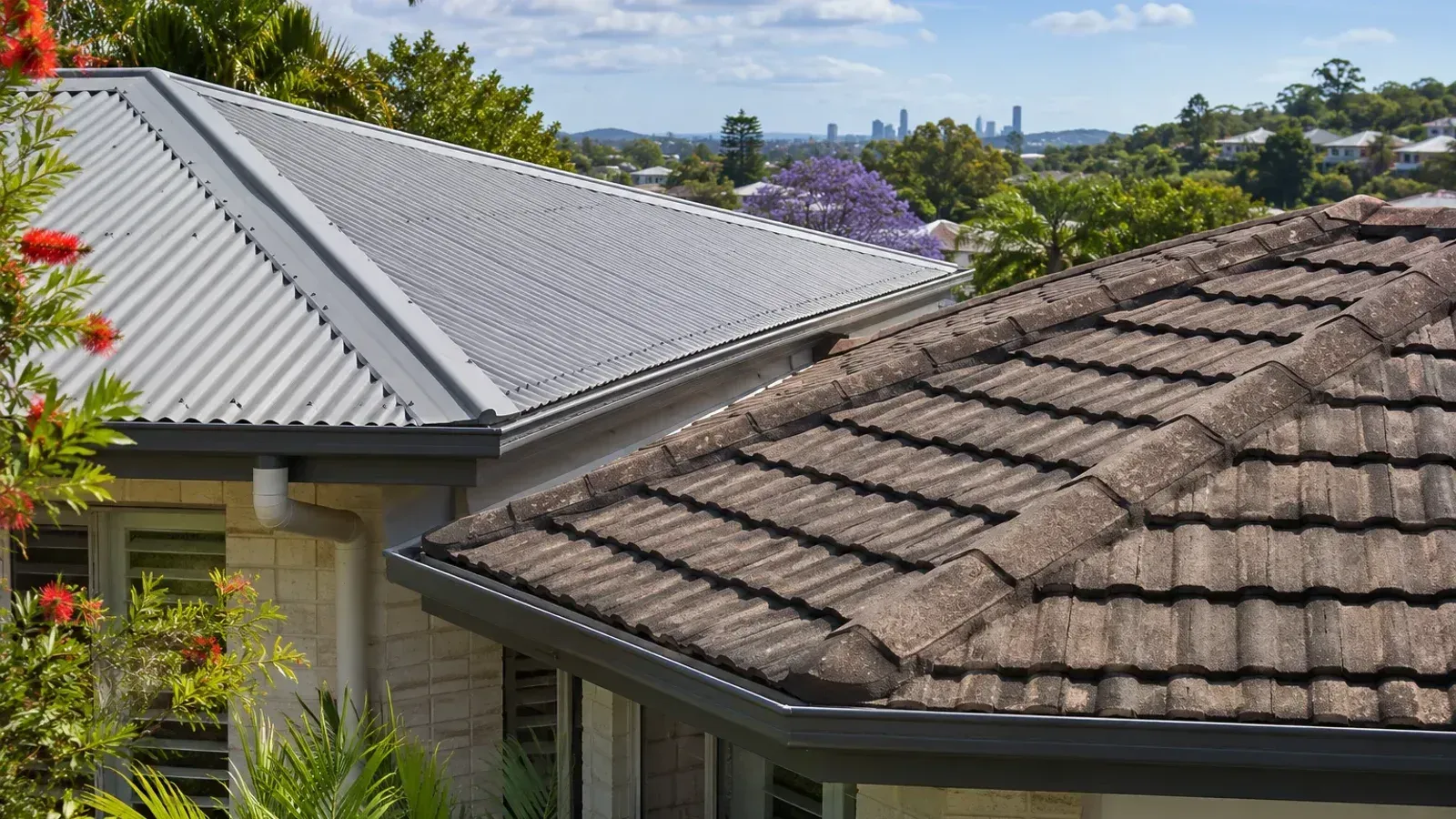
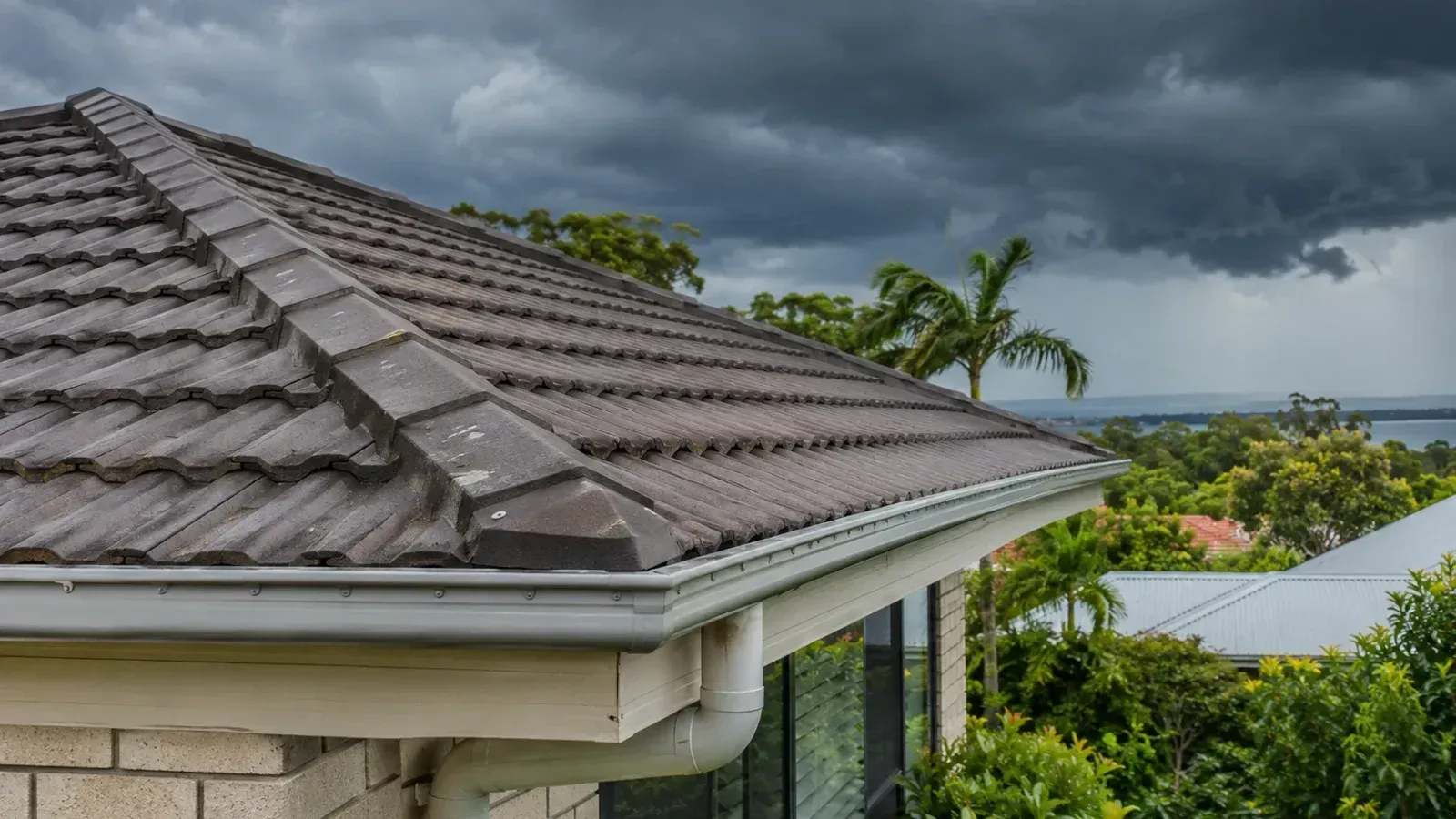
Redlands roof storm preparation starts on the ground, before the first storm arrives. Record any visible changes in the roof covering and how water leaves the property. A ground-level baseline helps distinguish existing wear from fresh damage after bad weather.
Start Redlands roof storm preparation with a baseline
Bayside suburbs such as Cleveland, Wellington Point, Ormiston, Thornlands and Victoria Point get the full run of south-east Queensland's storm season, along with salt-laden breezes off Moreton Bay. Many homes are brick and tile from the 1970s onwards, with some older timber homes under metal roofs. Whatever the covering, a few dated photos taken before summer give you something to compare against later.
Working from the ground or a safe vantage point, photograph:
- Each side of the roof, including ridges and hips
- Gutters, downpipes and where they discharge
- Valleys and flashings you can see without climbing
- Any tile or sheet edge that already looks out of line
- Ceiling marks inside the house, with the date noted
Stay off the roof. Wet, mossy or brittle surfaces are a real fall risk, and a long lens or zoom on a phone is usually enough.
Prioritise changes in position
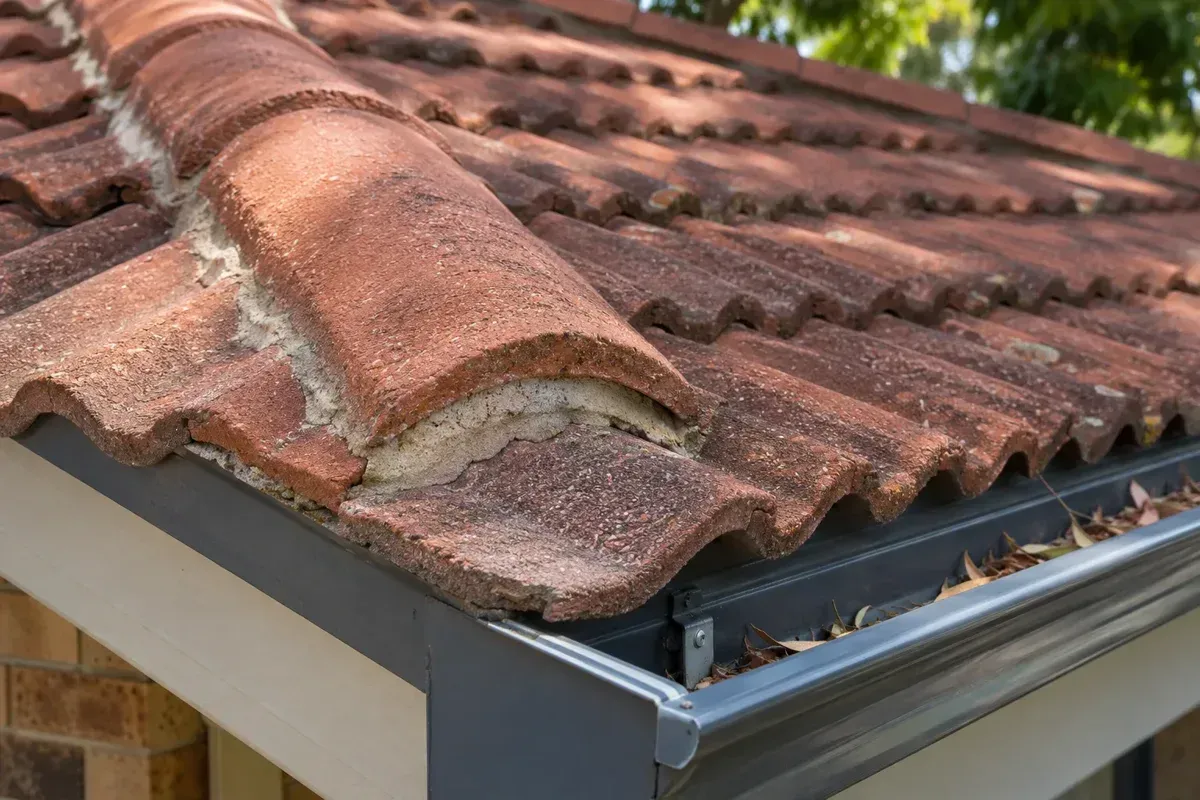
A tile or sheet edge that has moved deserves different attention from a stable colour change. Photograph the location from a safe position and arrange professional advice about the repair.
Fading, lichen and dull patches tend to develop slowly and are usually planning items. A lifted sheet, a slipped tile or a ridge cap that has shifted can let water in during the next heavy downpour, so it belongs at the top of the list.
When you contact a roofer, send the photo, the date it was taken and a note of where it sits on the roof, such as "front left corner above the garage". If the same spot appears in your baseline photos, include both so the roofer can see whether it has moved since you first recorded it.
Consider exposure on more than one elevation
A sheltered bayside side return and a windward roof edge may show different wear. Photograph both from the ground. Ask for a quotation that distinguishes immediate defects from planned maintenance, especially when storm preparation coincides with an older repaint.
Close to the water, salt in the air can speed up corrosion of exposed metal such as fixings, flashings and metal roof sheets, and coatings on the windward side often weather first. Slopes facing the prevailing breeze can also collect more debris in gutters after a blow. Comparing photos from each side helps the roofer see whether wear is general or concentrated in one place.
Separating immediate defects from planned work
A useful quotation sets out what needs attention before storms and what can be planned. If the roof is due for recoating, ask whether minor tile damage and ridge work can be addressed as part of the restoration rather than as separate jobs. JMZ's terracotta roof restoration and metal roof restoration pages explain what each process involves.
JMZ specialises in roof restoration and membrane painting. Its restoration scope can include minor visible broken, cracked or chipped tiles. Arrange metal roof repairs, sheet replacement or structural work with a suitably qualified roofing contractor before painting.
FAQs
What records help after the first storm of the season?
Keep the baseline photos, dates of repairs and any new photos taken from a safe position. Record whether the issue appeared suddenly or had already developed during earlier rain.
Should I restore my roof before storm season?
Not necessarily. Movement, broken tiles or loose sheets should be dealt with first, while a restoration is a planned decision based on the roof's overall condition. Ask the roofer to explain which items are urgent and which can wait.
Does salt air affect tile roofs as well as metal roofs?
Tiles themselves do not rust, but tile roofs still have metal components such as flashings and fixings, and coatings weather over time. On a metal roof, salt exposure can matter more. Ask the roofer to point out any corrosion they see and explain whether it falls within restoration or needs a roofing contractor first.
Ready for storm season on the bayside
Good Redlands roof storm preparation means a dated baseline, attention to anything that has moved and a clear split between urgent defects and planned work. Read JMZ's storm-season preparation guide, then request a roof restoration quotation from JMZ.